How to Choose the Right Hypo Needles for Your Needs?
Choosing the right Hypo Needles can significantly impact your experience with injections. These needles are vital for various applications, including diabetes management and hormone therapy. However, selecting the appropriate type often overwhelms many individuals. The market offers a wide array of options, each designed for specific needs.
Consideration factors include the needle gauge and length. A lower gauge number indicates a thicker needle, which can affect comfort levels during use. Shorter needles serve different purposes than longer ones, which are often necessary for deeper injections. Understanding these distinctions helps you make informed choices.
Choosing hypo needles is not just about comfort. It reflects your understanding of health management. The wrong choice could lead to complications or discomfort. Take time to reflect on your needs and consult healthcare professionals for personalized advice. This attention to detail can enhance the efficacy of your treatments.
Understanding Hypo Needles: Types and Functions
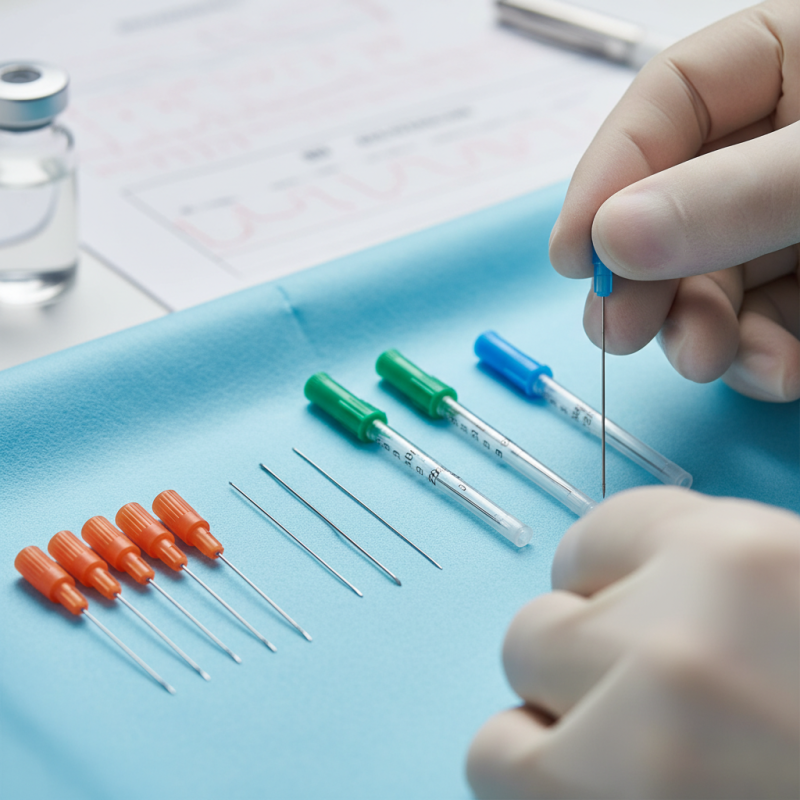
Understanding hypo needles is crucial for effective medical and personal care. These needles come in various types, each designed for specific applications. For instance, insulin needles are typically shorter and finer. They minimize pain and make injections more comfortable. According to a report by the World Health Organization, proper needle selection can reduce injection-related complications by up to 30%.
Hypo needles also vary in gauge. A higher gauge means a thinner needle. This aspect is vital for those requiring frequent injections. For example, individuals with diabetes often prefer a 31-gauge needle for their insulin. It's essential to consider the size of the injection site and the medication type. Misjudging these factors can lead to inadequate dosages or increased discomfort.
Tips: Always consult a healthcare provider for personalized advice. They can guide on the most suitable needle type based on your needs. Additionally, proper storage of needles ensures their effectiveness. Keep them away from direct sunlight and moisture. Always dispose of used needles in a designated sharps container. Neglecting these practices can lead to safety hazards, increasing the risk of needle-stick injuries.
Key Considerations for Selecting Hypo Needles
Choosing the right hypo needles can feel overwhelming. Several factors should guide your selection. Firstly, consider the needle gauge. A lower gauge means a thicker needle. Thinner needles can cause less pain but may not be suitable for all applications. Test various gauges to find what works best for you.
Next, think about the length of the needle. Longer needles may reach deeper tissues but can be intimidating. A shorter needle might suffice for surface injections. Make sure to match the needle length to your specific needs. Sometimes, trying multiple lengths can help you understand your comfort level.
Safety features are also essential. Some needles come with retractable designs to minimize injury risks. However, these can sometimes be harder to use. Reflect on what you prioritize: safety or ease of use. Remember, the right choice is often subjective. Your experience, comfort, and intended use will shape your decision. Don't hesitate to consult a healthcare professional for advice tailored to your unique situation.
Comparing Needle Sizes and Their Impact on Usage
When selecting hypo needles, size matters significantly. Different needle gauges influence the comfort and effectiveness of injections. A commonly referenced metric states that a higher gauge means a thinner needle. For instance, a 30-gauge needle is much finer than a 25-gauge needle. This can affect how medication is delivered into the body. Thinner needles usually cause less pain but may not be suitable for all medications.
Recent studies have shown that patients report less anxiety and pain with smaller gauge needles. One report highlighted that 70% of participants preferred a 30-gauge needle. However, not all scenarios benefit from this choice. Thinner needles might clog more easily when delivering viscous solutions. Healthcare professionals must balance patient comfort with the practical aspects of medication delivery.
Moreover, the length of the needle is equally important. A standard 1-inch needle may suffice for intramuscular injections, but ½-inch needles work better for subcutaneous injections. Misjudgments in choice can lead to ineffective treatments. This complexity highlights the importance of expertise when choosing hypo needles. Understanding individual needs and characteristics of the injections can lead to better outcomes.
How to Choose the Right Hypo Needles for Your Needs?
This chart compares different needle sizes and their impact on usage for hypo needles. The data reflects the common sizes used and their corresponding application frequency in various medical practices.
Evaluating the Material and Design of Hypo Needles
Choosing the right hypo needles requires attention to material and design. Different materials affect durability and comfort. Stainless steel is common for its strength. Special coatings can reduce friction and enhance ease of use.
Design plays a crucial role as well. A tapered needle tip can minimize discomfort during injections. The gauge of the needle impacts the thickness of the needle. Thinner needles may reduce pain, but they can also affect fluid flow. Always consider the specific needs of your procedure.
Tips:
When selecting hypo needles, think about your sensitivity. A finer gauge might be better for patients with a low pain threshold. Check for user reviews on comfort too. Not all needles are created equal, so personal experiences can guide you. Reflect on past choices to improve your selection process. What worked before? What didn’t?
Best Practices for Safe Handling and Disposal of Hypo Needles
Safe handling and disposal of hypo needles are crucial for health safety. According to the Centers for Disease Control and Prevention (CDC), improper disposal can lead to needle-stick injuries and infections. In the laboratory or clinical setting, keeping your workspace organized reduces the risk of accidents. Use designated sharps containers that are puncture-proof and clearly labeled.
It's important to handle hypo needles with care. Always wear gloves when touching needles or syringes. If a needle is dropped, do not attempt to pick it up with your hands. Instead, use forceps or a scoop device. Many healthcare professionals overlook the importance of disposing of needles immediately after use. Delayed disposal increases the chance of injury.
Keep your disposal containers no more than three-quarters full. This reduces overflow and ensures easy transport. Local regulations often dictate the disposal method for medical waste. Research these guidelines to avoid any potential fines. Regular training on needle safety for staff members can improve overall safety practices in the facility. Remember: safety is a shared responsibility. Take every precaution seriously.