2026 Top Types of Femoral Neck Fracture Implants

Femoral Neck Fracture implants are entering 2026 under intense clinical and economic pressure. The International Osteoporosis Foundation projects hip fractures could reach 4.5 million annually by 2050. That projection matters because femoral neck injuries often threaten mobility, independence, and survival. In the United States, the CDC reports more than 300,000 older adults are hospitalized for hip fractures each year. The figure includes several fracture locations, but it shows the scale of the problem clearly.

Clinical decisions are not simple. Age, fracture displacement, bone quality, activity level, and time to surgery can change the preferred implant. Cannulated screws may preserve the native joint in selected patients. Hemiarthroplasty and total hip arthroplasty can provide faster stability for many displaced fractures. Cemented stems may improve fixation in fragile bone, although surgical teams must assess patient-specific risks. No implant wins every time.

Professor Mohit Bhandari, an international orthopaedic trauma researcher, has described hip fractures as “a global health problem and a major source of morbidity and mortality in older adults.” His observation remains practical, not merely academic. A loose stem, poor reduction, or overlooked osteoporosis can turn a short operation into prolonged rehabilitation. This guide examines the 2026 top types of Femoral Neck Fracture implants, comparing fixation principles, clinical indications, materials, recovery considerations, and emerging design trends. Evidence changes. Some recommendations remain uncertain. That uncertainty deserves honest discussion.
2026 Top Types of Femoral Neck Fracture Implants

Femoral Neck Fracture Patterns and Implant Selection Principles

2026 Top Types of Femoral Neck Fracture Implants

Femoral Neck Fracture Patterns and Implant Selection Principles

Femoral neck fractures are not one uniform injury. Pattern matters. A valgus-impacted fracture may remain stable, while a displaced intracapsular fracture threatens femoral head blood supply. Posterior comminution, vertical fracture lines, and poor bone quality can further reduce fixation reliability. The International Osteoporosis Foundation projects that annual hip fractures could reach 4.5 million worldwide by 2050. This pressure makes accurate pattern recognition increasingly important.

For younger patients with preserved femoral-head viability, surgeons often consider internal fixation. The construct must control shear, rotation, and shortening. Multiple cancellous screws may suit selected nondisplaced patterns, while a fixed-angle device can provide stronger angular control in vertical fractures. However, implant strength cannot correct poor reduction. That is an uncomfortable limitation.

For older adults with displaced intracapsular fractures, hemiarthroplasty or total hip arthroplasty is commonly evaluated. The American Academy of Orthopaedic Surgeons supports arthroplasty for many displaced fractures and recommends cemented stems in appropriate patients. NICE guidance also suggests total hip arthroplasty for carefully selected, independently mobile patients with suitable medical status. Age alone should not decide. Pre-injury walking ability, cognition, acetabular disease, bone density, and rehabilitation potential deserve equal attention. In daily practice, radiographs can underestimate posterior comminution. CT may clarify difficult patterns, but it should not replace clinical judgment. No algorithm is perfect. Selection should remain patient-specific, evidence-led, and transparently discussed with the surgical team.

Cannulated Screw Systems for Femoral Neck Stabilization

2026 Top Types of Femoral Neck Fracture Implants

Cannulated Screw Systems for Femoral Neck Stabilization

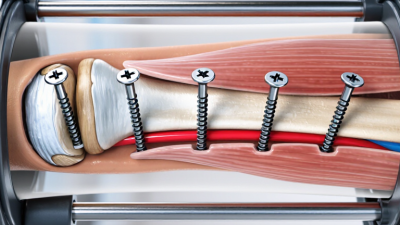
Cannulated screw systems remain a practical option for selected femoral neck fractures. Their hollow design allows placement over guidewires, improving control during reduction and fixation. Surgeons commonly position multiple screws in a triangular or inverted configuration. This arrangement can resist rotation and support load sharing across the fracture.

Accurate reduction matters more than speed. A small rotational error can alter screw placement and increase joint complications. Intraoperative imaging should confirm screw length, parallel alignment, and safe distance from the femoral head surface. Patient age, bone quality, fracture displacement, and healing potential also influence implant selection. Evidence supports careful case selection, but no construct is universally reliable. Not every fracture behaves predictably.

Tips: Use guidewires to maintain planned trajectories before drilling. Keep the screws parallel when the fracture pattern allows. Check for joint penetration in more than one view. In osteoporotic bone, fixation may need additional support or a different implant strategy. The technique is not foolproof. Regular review of radiographs and clinical symptoms remains essential after surgery. A surgeon’s experience with reduction, imaging, and fracture biology should guide the final decision.

2026 Top Types of Femoral Neck Fracture Implants - Cannulated Screw Systems for Femoral Neck Stabilization

Implant System Type Typical Configuration Common Screw Diameter Thread Design Best-Suited Fracture Pattern Primary Stabilization Principle Key Clinical Considerations
Three parallel partially threaded screws Three screws placed in parallel, commonly arranged as an inverted triangle on the anteroposterior view Typically 6.5–7.3 mm Partially threaded; thread length selected to cross the fracture while preserving interfragmentary compression Nondisplaced or well-reduced femoral neck fractures, particularly in younger or physiologically active patients Multiple-point fixation, interfragmentary compression, and resistance to rotation and varus collapse The screws should be spread within the femoral neck without penetrating the joint; reduction quality and subchondral purchase are critical.
Three parallel fully threaded screws Three parallel screws with threads extending along most or all of the working length Typically 6.5–7.3 mm Fully threaded; may be used with a washer or a controlled-compression technique depending on the system Selected displaced or unstable fractures after anatomic reduction, especially when angular stability and maintenance of fixation are priorities Fixed-angle-like resistance to shortening and improved control of rotation and shear Fully threaded screws may provide less automatic interfragmentary compression than partially threaded screws; compression must be planned during reduction and insertion.
Two parallel cannulated screws Two screws positioned centrally or in a superior–inferior arrangement, depending on neck geometry Typically 6.5–7.3 mm Partially threaded or fully threaded Selected nondisplaced fractures or patients with limited femoral neck width where three screws cannot be safely accommodated Compression across the fracture with a lower implant burden and less disruption of the lateral cortex Provides less rotational and torsional resistance than a well-spaced three-screw construct; screw position and fracture stability are especially important.
Four-screw parallel construct Four cannulated screws arranged in a compact parallel pattern when the femoral neck can accommodate the construct Typically 6.5–7.3 mm Usually partially threaded; fully threaded options may be selected for enhanced resistance to shortening Unstable or vertically oriented fractures requiring additional fixation points after accurate reduction Increased construct stiffness and improved distribution of load across the femoral neck Additional screws can increase bone occupancy and may compromise safe spacing; fluoroscopic assessment is required in multiple planes.
Divergent or convergent cannulated screw configuration Screws are intentionally angled relative to one another rather than placed strictly parallel Typically 6.5–7.3 mm Partially or fully threaded Fractures with limited proximal fragment dimensions or patterns in which multiplanar purchase is needed Improved control of rotation and resistance to displacement in more than one plane The trajectory must avoid joint penetration and preserve adequate bone between screws; this pattern is technically more demanding than parallel fixation.
Cannulated screws with washers One or more cannulated screws used with washers beneath the screw heads Commonly 6.5–7.3 mm screws with compatible washers Usually partially threaded, although fully threaded designs may also be used Osteoporotic bone, comminuted lateral cortex, or situations where the screw head may otherwise sink into the cortex Distributes load over a larger cortical area and reduces local screw-head penetration Washers may irritate the soft tissues or conflict with adjacent implants; they must be seated flush without excessive lateral prominence.
Large-diameter cannulated screw system One or more larger screws selected to maximize thread purchase in an appropriate femoral neck Approximately 7.3–8.0 mm, depending on anatomy and system design Partially threaded or fully threaded Selected cases with adequate femoral neck width and a need for increased thread-bone contact Higher individual screw purchase and compression capacity Larger screws remove more bone and may restrict the number of safe fixation paths; implant diameter must match patient anatomy.
Small-diameter cannulated screw system Multiple smaller screws placed with wider spacing when the proximal fragment is narrow Approximately 4.5–6.5 mm, depending on the system and patient anatomy Partially threaded or fully threaded Smaller patients, narrow femoral necks, or fractures requiring several fixation trajectories Allows more flexible screw placement while limiting bone removal per screw Individual screws have lower bending strength than larger screws; the overall construct depends on screw number, spacing, and reduction quality.
Clinical note: Implant selection should be based on fracture displacement, fracture-line orientation, bone quality, femoral neck dimensions, patient age and activity level, reduction quality, and the surgeon’s assessment. The listed dimensions are typical ranges rather than universal specifications.

Dynamic Hip Screws and Femoral Neck System Implants

2026 Top Types of Femoral Neck Fracture Implants

Dynamic hip screws and femoral neck system implants remain important options for selected femoral neck fractures. A dynamic hip screw uses a large lag screw and side plate. The screw can slide as the fracture compresses during loading. This design may suit basicervical or vertically oriented fractures with enough lateral bone for plate fixation. It usually requires a larger surgical exposure than compact systems.

Femoral neck system implants use a short lateral plate, a central bolt, and an antirotation screw. Their compact structure may reduce soft-tissue disruption while providing angular support. The antirotation component helps control femoral head rotation during insertion and early movement. Controlled collapse can support healing, but excessive shortening may affect limb length and hip mechanics. Small changes matter.

Patient selection remains decisive. Surgeons assess fracture displacement, posterior comminution, bone quality, reduction stability, and the patient’s activity level. A young patient with an undisplaced fracture may need a different strategy from an older patient with fragile bone. Imaging should include clear anteroposterior and lateral views. Computed tomography can clarify complex fracture lines.

A common planning mistake is treating implant choice as a hardware contest. It is not. Reduction quality, screw position, and postoperative protection often influence results more than implant shape. No system removes the risk of nonunion, avascular necrosis, or fixation failure. Surgical judgment still needs humility.

Hemiarthroplasty Implants for Displaced Femoral Neck Fractures

For displaced femoral neck fractures, hemiarthroplasty replaces the femoral head while preserving the patient’s acetabulum. It is commonly considered for older adults with limited joint disease, especially when stable fixation is unlikely. The implant includes a femoral stem and a head that moves inside the native socket. Fit matters. Surgeons assess bone quality, canal shape, mobility, cognition, and preinjury activity before selecting an implant.

Cemented stems can provide immediate fixation in fragile bone, while uncemented stems depend on bone ingrowth. Each option has trade-offs. Cement insertion requires careful monitoring because rare cardiopulmonary reactions can occur. Uncemented fixation may cause early thigh pain or fracture if the stem does not fit the canal well. Bipolar designs may reduce contact between the implant and acetabulum, but clinical advantages are not universal. The head size should restore leg length and stability without over-tightening soft tissues.

Reliable planning combines calibrated imaging, templating, and direct assessment during surgery. Experienced teams also check offset, version, and stem stability before closure. Early mobilization is often encouraged, but weight-bearing depends on fixation, fracture pattern, and overall health. Dislocation, infection, periprosthetic fracture, loosening, and acetabular wear remain important concerns. No implant suits every patient. Evidence changes. A careful surgeon should revisit assumptions when the radiograph, bone, and patient goals do not align.

2026 Top Types of Femoral Neck Fracture Implants

Hemiarthroplasty implants for displaced femoral neck fractures are commonly classified by bearing design and femoral stem fixation. Unipolar implants have one primary articulating interface between the prosthetic head and the acetabulum, while bipolar implants add an internal head–shell articulation. Either design may use a cemented or uncemented femoral stem.

The chart compares the number of articulating interfaces in each standard implant configuration; stem fixation method does not change this count.

Total Hip Arthroplasty Implants and Modern Treatment Considerations

Femoral neck fractures demand more than a quick implant selection. For selected patients, total hip arthroplasty replaces both the femoral head and damaged acetabular surface. It may suit active adults with good mobility, longer life expectancy, or pre-existing hip arthritis. A careful assessment includes radiographs, bone quality, walking ability, cognition, and home support.

Implant fixation remains a major decision. Cemented stems can provide reliable early stability in fragile bone, while uncemented stems may suit patients with stronger bone and suitable anatomy. Neither option is universally superior. The surgeon must consider fracture pattern, canal shape, osteoporosis, and the patient’s ability to follow rehabilitation instructions. Small details matter, including leg length, offset, and soft-tissue tension.

+

Modern total hip systems may use larger femoral heads or dual-mobility designs to reduce dislocation risk. Bearing selection also affects wear, stability, and long-term performance. However, a sophisticated implant cannot correct poor positioning or inadequate rehabilitation. I would also question routine assumptions: an active older patient may benefit from total hip arthroplasty, but frailty can change that balance quickly. Surgical timing, infection prevention, thrombosis planning, and early supervised walking remain equally important. The best choice is individualized, documented, and reviewed honestly when recovery does not follow the expected path.