2026 Top Pediatric Orthopedic Surgery Equipment Suppliers?
Selecting a supplier for Pediatric Orthopedic Surgery equipment takes more than comparing catalogs or choosing a familiar brand. This 2026 guide looks at suppliers through practical considerations that matter in pediatric care: instrument sizing, product availability, service support, and documentation. Children’s anatomy changes with age, so equipment designed for adults may not suit every procedure or patient.
Small plates, narrow instruments, and clearly organized sterilization trays can make a meaningful difference in operating-room preparation. Fit and compatibility still require careful clinical review. A product description alone cannot show how equipment performs in a specific setting. That matters.
The guide also considers how suppliers communicate training options, repair processes, delivery timelines, and product traceability. Buyers can compare these details alongside relevant quality records and feedback from qualified clinical teams. Look closely. Supplier rankings can be useful starting points, but they may reflect limited information, changing product lines, or different evaluation methods. No single list can establish the best choice for every hospital.
Use the comparisons to prepare focused questions, not to replace professional judgment. Confirm current specifications, availability, and support directly with each supplier. Then review options with the clinicians and procurement staff who understand local needs. Even a careful shortlist has gaps. Recognizing them is part of making a more informed decision.
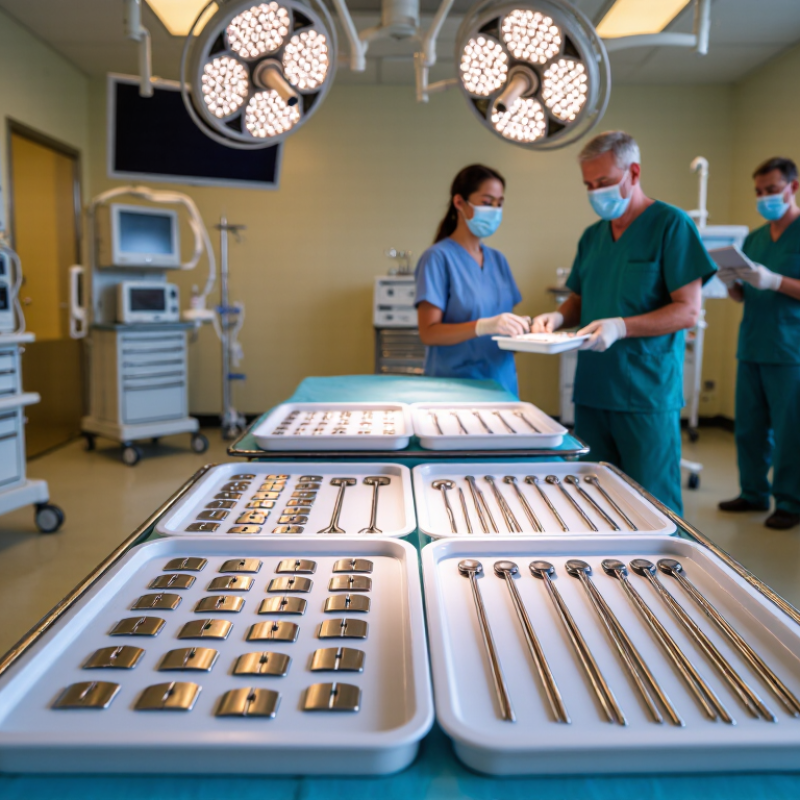
Table of Contents
[Hide]
Defining Pediatric Orthopedic Surgery Equipment and FDA Device Classes
Pediatric orthopedic surgery equipment includes instruments and devices used to assess, stabilize, or correct a child’s bones and joints. Examples range from reduction tools and external fixation components to plates, screws, and intramedullary devices. Smaller dimensions matter, but pediatric use is not simply adult equipment scaled down. Growing bones, open growth plates, and changing anatomy can affect device selection and surgical planning. Fit is critical.
The FDA assigns medical devices to Class I, II, or III according to intended use and risk, not merely the patient’s age. Class I devices generally face general controls; Class II devices typically require additional controls; Class III devices usually receive the highest level of review. Some regulatory pathways have exceptions, so a class label alone does not tell the whole story. Check the device’s intended use and FDA documentation.
For supplier evaluation, request clear specifications, traceability records, sterilization information, and instructions for use. Confirm that sizes and compatible components match the surgical team’s needs. Ask how product changes are communicated, too. A catalog can look reassuring. It is not enough. Regulatory status and clinical suitability are separate questions, and busy teams may not always catch that distinction.
Clinical Need: AAOS Estimates Scoliosis Affects 2–3% of Children
2026 Top Pediatric Orthopedic Surgery Equipment Suppliers?
Clinical Need: AAOS Estimates Scoliosis Affects 2–3% of Children
The American Academy of Orthopaedic Surgeons estimates that scoliosis affects 2–3% of children. Many cases need observation, not surgery. But when an operation is recommended, pediatric teams need equipment suited to a child’s size and developing body. Small details matter. A stable operating table, appropriately sized instruments, and reliable imaging can support careful positioning and planning.
Suppliers serving pediatric orthopedic surgery should provide clear product specifications, dependable maintenance, and training for clinical staff. Teams may also assess compatibility with imaging and neuromonitoring systems, sterile processing needs, and access to replacement parts. These practical checks help reduce delays and support consistent care. A supplier’s claims are not enough; clinicians and hospital procurement teams should review evidence, safety information, and fit for their own setting.
Scoliosis care varies with curve severity, growth, symptoms, and other clinical findings. Equipment cannot replace that judgment. Nor does every child with scoliosis need an operation. Procurement discussions can still overlook the daily realities: cramped storage, rushed room turnover, or instruments that feel awkward in smaller hands. That part deserves more attention. Careful evaluation, involving surgeons, nurses, and biomedical staff, can help match equipment to real pediatric needs.
Mapping Suppliers: Implants, Fixation Systems, Imaging, and Instruments
Mapping pediatric orthopedic suppliers works best by clinical function, not catalog size. Implant options may include appropriately sized plates, screws, nails, and growth-related devices. Teams should check material details, available dimensions, and whether instructions clearly describe intended use. Small anatomy leaves little room for guesswork.
Fixation systems deserve a separate review. Look at instrument compatibility, locking mechanisms, and the range of sizes available for different procedures. A neatly arranged tray matters during a busy operating day. So does reliable reprocessing guidance. These details can be easy to overlook when procurement discussions focus mainly on implant pricing.
Imaging suppliers support planning and intraoperative decisions through systems such as fluoroscopy and portable radiography. Compare image quality, dose-management features, room fit, and service response times with clinical staff. Instruments, from reduction tools to cutting guides, should feel balanced and remain easy to identify. Ask suppliers for technical documentation, traceability records, training, and maintenance support. A supplier map is never perfect: categories overlap, and local workflow changes the priorities. A product may look suitable on paper, yet prove awkward beside the operating table. That deserves a closer look.
Screening 2026 Suppliers: FDA Clearance, ISO 13485, and Pediatric Sizing
For 2026 supplier screening, verify FDA clearance at the device level. Search the FDA 510(k) database and match the listed model, intended use, and manufacturer to the supplier’s offer. Clearance is not a blanket endorsement of a company or every product in its catalog. Check labeling and documentation, not just a sales claim. Then confirm that an ISO 13485 certificate is current and covers the manufacturing site and activities involved. Certification supports a quality-management system; it does not prove a device’s clinical performance.
Pediatric sizing deserves equal scrutiny. The WHO Multicentre Growth Reference Study gathered data from 8,440 children in six countries to develop growth standards for early childhood. That technical work is a useful reminder: age labels alone cannot describe a child’s fit. Ask for measurement ranges, compatible instrument sizes, and clear instructions for selecting components. A small difference in limb circumference can affect fit and handling. Fit is not age.
Request sample sizing charts and compare them with the dimensions your clinical team actually encounters. Confirm that replacement parts and size options are documented, too. A polished chart can still leave gaps between sizes. This is easy to overlook, and worth admitting: paperwork cannot confirm that every size is practical in a real operating room. WHO, Child Growth Standards: Methods and Development, 2006; FDA, 510(k) Premarket Notification database.
2026 Top Pediatric Orthopedic Surgery Equipment Suppliers? - Screening 2026 Suppliers: FDA Clearance, ISO 13485, and Pediatric Sizing
Supplier-screening checklist for pediatric orthopedic surgery equipment. Regulatory status and sizing must be verified for each specific device and model; this table does not rank or make claims about individual suppliers.
| Screening dimension | Equipment or scope | What to verify | Acceptable evidence | Pediatric-specific check |
|---|---|---|---|---|
| FDA regulatory status | Implants, instruments, fixation systems, and powered devices | Confirm the applicable U.S. pathway and status for the exact device and intended use. FDA requirements vary by device; some devices may be exempt from premarket submission. | Device-specific FDA database record or applicable exemption information, plus labeling that matches the intended use. | Check whether the labeling and evidence support the proposed patient population, anatomy, and use; do not infer pediatric suitability from adult indications. |
| Premarket submission type | Devices subject to FDA premarket review | Where applicable, distinguish 510(k) clearance, De Novo authorization, and PMA approval. These are distinct regulatory pathways and should not be used interchangeably. | FDA decision record corresponding to the exact model or device family and its cleared or approved indications. | Review the decision record and labeling for population-specific limitations, indications, or exclusions. |
| Quality management system | Manufacturer and relevant manufacturing sites | Check whether an ISO 13485 certificate is current and covers the relevant sites, activities, and medical-device scope. Certification alone does not establish FDA clearance or device performance. | Certificate showing issuer, scope, covered locations, and validity dates; confirm with the issuing certification body when appropriate. | Confirm that the quality scope includes the specific device type and any relevant design or manufacturing activities. |
| Pediatric sizing and fit | Fixation plates, screws, nails, retractors, and instrument sets | Request the model-specific size range, dimensions, compatible instruments, and sizing guidance. A “pediatric” description alone does not establish suitability for every age or anatomy. | Current technical specification, dimensional drawings, catalog configuration, and applicable instructions for use. | Assess fit against the intended patient population and procedure; verify relevant dimensions rather than relying only on age labels. |
| Materials and biocompatibility | Implants and patient-contacting components | Verify material specifications and the available biological safety assessment for the device’s contact type and duration. | Device-specific material documentation and relevant biocompatibility information, such as an assessment performed under applicable standards. | Confirm the documentation applies to the exact configuration and patient-contacting materials being considered. |
| Sterility and reprocessing | Sterile implants and reusable surgical instruments | Identify whether each item is supplied sterile or requires processing. For reusable devices, follow the validated cleaning, disinfection, and sterilization instructions. | Labeling, instructions for use, sterilization information, and validated reprocessing directions for the specific device. | Check that smaller or complex instruments can be cleaned, inspected, and processed using the facility’s validated workflow. |
| Traceability and labeling | Implants, sterile kits, and device components | Review applicable labeling, lot or serial identification, storage conditions, and UDI information where required. | Device labels and packaging information consistent with applicable U.S. requirements and the supplied product configuration. | Confirm component sizes and identifiers remain clear through inventory, sterile processing, and operating-room use. |
| Post-market support | All device categories | Establish a process for safety notices, recalls, complaints, product changes, and questions about device use. | Documented contact and escalation channels, complaint-handling process, and applicable recall or safety-notice records. | Confirm availability of procedure-specific technical information and support for the selected pediatric configurations. |
Verify current records and product documentation before procurement. FDA status, certification scope, indications, and available sizes can differ by device, model, market, and manufacturing site.
Comparing Suppliers: Clinical Evidence, Sterilization, Service, and Availability
When comparing pediatric orthopedic surgery equipment suppliers, begin with evidence tied to the intended procedure and patient group. Ask for published evaluations, technical specifications, and clear limits on use. Evidence from adult procedures alone may not answer pediatric questions. Details matter: instrument size, implant options, and compatibility with imaging can affect fit in a small operating room. Request documentation, not just assurances.
Sterilization deserves equal attention. Confirm that each reusable instrument has clear cleaning and sterilization instructions, including any limits on repeated processing. Ask staff to review tray layout and identify items that are difficult to inspect. A crowded case cart can hide a missing component. Small gaps in documentation create extra work. They can also make routine checks less reliable.
Service and availability become visible when a case schedule changes. Ask how quickly the supplier can replace a damaged instrument, provide loaner equipment, or answer a technical question. Check whether critical components are stocked locally and whether delivery estimates include weekends or holidays. A polished service promise is not a response-time record. Compare written service terms with references from hospitals that use similar equipment. I would still leave room for uncertainty: a supplier’s past performance cannot guarantee every future delivery.
Related Posts
-
Top Quality Tibial Intramedullary Nail for Global Buyers?
-
How to Choose the Right External Fixation System for Your Needs?
-
2026 How to Use a Distal Femoral Plate for Effective Fracture Treatment?
-

2026 How to Prepare for Limb Lengthening Surgery Effectively?
-
What are the Benefits of Ilizarov External Fixator in China?
-

Top 10 Benefits of Limb Lengthening Surgery You Should Know?