2026 Best Dynamic Hip Screw Suppliers for Global Buyers
Selecting reliable Dynamic Hip Screw suppliers in 2026 requires more than comparing prices on a spreadsheet. Global buyers need consistent product quality, transparent documentation, responsive communication, and practical evidence of manufacturing capability. A supplier may show polished photographs, yet the real test lies in traceability, material specifications, packaging controls, and shipment reliability.
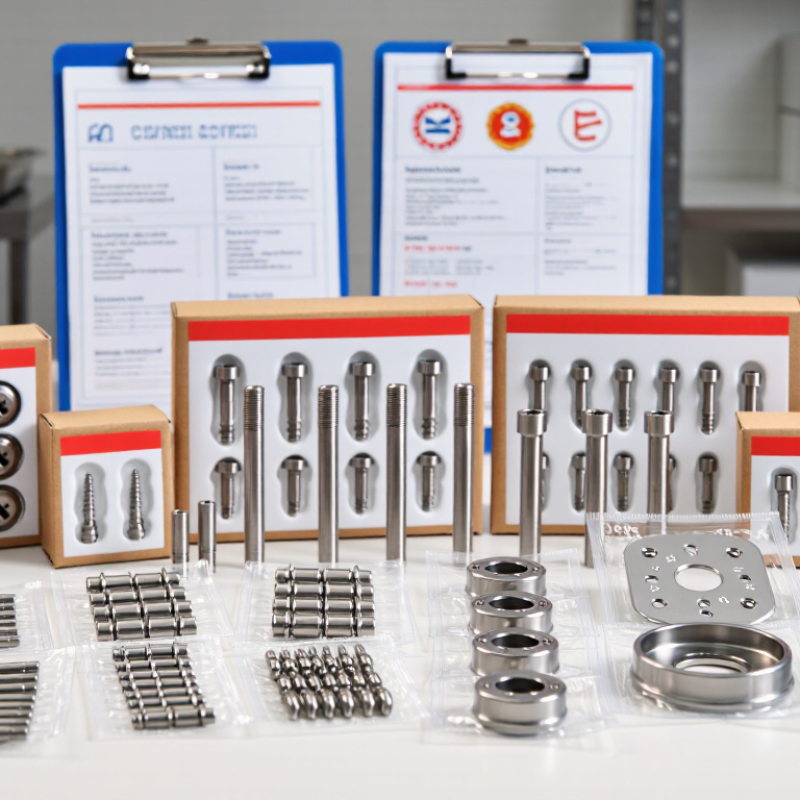
This guide examines leading suppliers for hospitals, distributors, and orthopedic procurement teams. It considers implant design, plate and screw compatibility, stainless steel or titanium options, sterilization status, and available size ranges. It also reviews quality systems, such as ISO 13485 certification, independent testing, and regulatory documentation appropriate to the destination market. Details matter. A clearly labeled box, a readable lot number, and a complete certificate can prevent costly confusion during receiving inspections.
Experience still exposes gaps that brochures often hide. Some suppliers respond quickly before an order, then become difficult to reach afterward. Others offer low prices but provide limited technical support or inconsistent lead times. That deserves scrutiny. Buyers should verify production capacity, complaint handling, warranty terms, and after-sales service before signing agreements. No ranking is permanently perfect; supplier performance can change with ownership, demand, or regional logistics.
The following overview helps global buyers compare Dynamic Hip Screw suppliers with a more balanced approach. It emphasizes evidence over advertising and suitability over popularity. Clinical use must always follow qualified medical judgment and applicable local requirements. A careful decision protects budgets, procurement teams, and most importantly, patients.
Table of Contents
[Hide]
Dynamic Hip Screws: Purpose, Design, and Clinical Applications
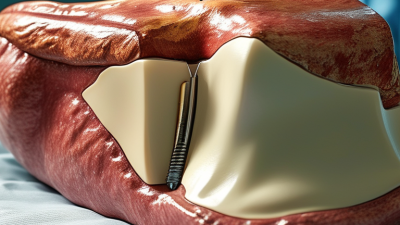
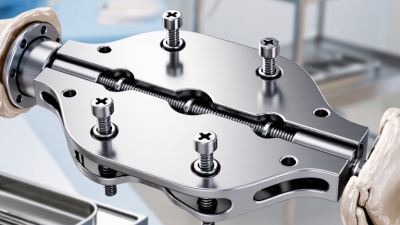
A dynamic hip screw stabilizes selected proximal femoral fractures. It uses a large lag screw, a side plate, and a barrel mechanism. The screw slides within the barrel as the fracture compresses during weight-bearing. This controlled collapse can support healing and reduce excessive implant stress. The design is commonly considered for stable intertrochanteric fractures. NICE guidance recommends sliding hip screw fixation for many trochanteric fractures, excluding reverse-oblique and certain subtrochanteric patterns.
Clinical selection depends on fracture geometry, bone quality, and patient mobility. A 2024 National Hip Fracture Database report documented more than 65,000 hip fractures across England, Wales, and Northern Ireland. That volume shows why consistent implant performance matters. It also exposes a limitation: population data cannot predict one patient’s fixation stability. Surgeons still need accurate imaging and careful reduction.
Radiographic control remains essential. The lag screw should sit centrally, with appropriate tip-apex distance and secure plate placement. Poor positioning may increase cut-out risk, especially in osteoporotic bone. Evidence reviews generally find comparable outcomes between sliding hip screws and cephalomedullary devices for selected stable fractures, while unstable patterns may need different fixation. Global buyers should request verified mechanical testing, ISO 13485 quality documentation, sterilization records, and traceability data. These documents do not replace clinical judgment. They simply make supplier evaluation more reliable.
Key Specifications for Comparing Dynamic Hip Screw Suppliers
2026 Best Dynamic Hip Screw Suppliers for Global Buyers
When comparing dynamic hip screw suppliers, begin with geometry, not price. Confirm the screw diameter, available lengths, thread design, and barrel compatibility. Common plate angles include 130°, 135°, and 140°, but the correct choice depends on surgical technique and inventory needs.
Check plate hole counts, barrel length, material grade, and surface finish. Stainless steel and titanium products may serve different clinical and handling preferences. Ask for dimensional inspection reports, mechanical test results, and material certificates. Reliable suppliers should provide traceable lot numbers and consistent packaging details. Small inconsistencies matter.
Quality systems deserve close attention. Review current ISO 13485 certification, manufacturing-site information, complaint procedures, and regulatory documents required in the destination market. Confirm whether the supplier supports sample evaluation and pre-shipment inspection. Communication speed is useful, but documented answers are more valuable.
Ask about minimum order quantities, production lead times, replacement policies, and stock for screws and plates. A supplier may offer attractive pricing yet lack matching components. That creates avoidable delays. In practical sourcing reviews, buyers sometimes focus too heavily on catalogs. I would also examine inspection records, sterilization status, and package labeling. One limitation remains: supplier documents cannot replace clinical judgment or local regulatory review. Compare the evidence carefully.
2026 Best Dynamic Hip Screw Suppliers for Global Buyers - Key Specifications for Comparing Dynamic Hip Screw Suppliers
Evidence-based comparison framework for evaluating dynamic hip screw systems, supplier capability, regulatory readiness, and international purchasing risk.
| Comparison Dimension | Recommended Benchmark or Typical Requirement | Evidence to Request from the Supplier | Why It Matters to Global Buyers |
|---|---|---|---|
| Product Configuration and Mechanical Specifications | |||
| System design | Sliding hip screw system consisting of a lag screw, barrel plate, cortical screws, and compatible instrumentation. | Product catalogue, dimensional drawings, system compatibility matrix, and surgical technique guide. | Confirms that all components are designed to function as one validated system rather than as unrelated parts. |
| Lag screw diameter | Common adult systems use an approximately 12.5 mm lag screw diameter; the exact size must match the approved design and clinical indication. | Controlled technical drawing, dimensional inspection report, and tolerance specification. | Diameter affects purchase planning, guide-wire compatibility, instrumentation selection, and implant performance. |
| Available lag screw lengths | Usually offered in multiple sizes, commonly covering approximately 60–120 mm in defined increments, subject to the validated product range. | Complete size chart, sample measurement report, and packaging label examples. | A broad, clearly controlled size range reduces intraoperative substitution and inventory gaps. |
| Plate barrel angle | Common configurations include 130°, 135°, and DHS plate angles; the supplier should specify every available angle and indication. | Angle-specific drawings, catalogue pages, and verification records for each configuration. | Angle availability supports anatomical matching and helps buyers avoid overstocking unsuitable configurations. |
| Plate-hole options | Typical options include 2-hole, 4-hole, 6-hole, and longer plates, depending on the validated system design. | Size matrix, hole spacing data, plate length data, and inspection records. | Different fracture patterns and fixation requirements may require different plate lengths. |
| Sliding and compression function | The lag screw should provide controlled telescoping within the barrel while maintaining secure plate fixation. | Functional test method, test results, design verification summary, and instructions for use. | Controlled sliding is central to the intended function of a dynamic hip screw system. |
| Material specification | Common implant materials include implant-grade stainless steel meeting ASTM F138 or ISO 5832-1, or titanium alloy meeting the applicable ISO 5832 specification. | Material certificates, heat or lot traceability, chemical composition reports, and supplier declarations. | Material identity and traceability are essential for biocompatibility, strength, and regulatory review. |
| Surface finish | Surfaces should be free from burrs, cracks, visible contamination, and unacceptable machining marks; critical dimensions must remain within approved tolerances. | Visual inspection criteria, surface-finish specifications, dimensional inspection records, and sample approval procedure. | Consistent finishing lowers handling risk and supports predictable surgical performance. |
| Quality Management and Regulatory Documentation | |||
| Quality management system | Current ISO 13485 certification from an appropriately accredited certification body is a strong minimum qualification for medical-device manufacturing. | Current certificate, certification scope, expiry date, audit status, and certificate verification details. | Shows that manufacturing, risk management, records, and corrective actions are controlled through a recognized medical-device quality system. |
| Risk management | Risk management should be documented in accordance with ISO 14971, including hazards related to breakage, migration, incorrect assembly, and material compatibility. | Risk management summary, hazard analysis, design FMEA or equivalent records, and residual-risk information. | Helps buyers assess whether foreseeable clinical and manufacturing risks have been systematically addressed. |
| Biological evaluation | Biocompatibility evidence should be appropriate to the device materials, tissue contact, and duration of contact, with testing or justification aligned to ISO 10993. | Biological evaluation plan and report, material history, test reports, and justification for any omitted tests. | Supports regulatory submissions and reduces the risk of incomplete technical documentation. |
| Device identification and labelling | Labels and instructions should identify product code, size, material, lot or batch number, sterilization status, shelf life where applicable, and manufacturer information. | Label artwork, packaging specifications, instructions for use, and traceability procedure. | Accurate identification reduces operating-room errors and simplifies recalls or field actions. |
| Market authorization support | Supplier should provide documentation suitable for the destination market, such as technical documentation, declaration of conformity, registration evidence, or authorized-representative information where required. | Destination-country regulatory checklist, current market authorization documents, declaration of conformity, and post-market surveillance procedure. | Regulatory requirements vary by jurisdiction; a product legally sold in one market may not be immediately eligible in another. |
| Manufacturing, Validation, and Supply Reliability | |||
| Critical process controls | Processes such as CNC machining, thread formation, passivation, cleaning, marking, packaging, and sterilization should have documented acceptance criteria. | Process flow chart, validation summaries, work instructions, inspection plans, and change-control procedure. | Critical-process control is more reliable than evaluating finished products by appearance alone. |
| Lot traceability | Each implant and associated packaging should be traceable to raw material, production records, inspection results, packaging, and release authorization. | Sample device history record, batch-release certificate, traceability map, and recall simulation summary. | Traceability is necessary for complaint investigation, corrective action, and regulatory reporting. |
| Inspection and testing | Inspection should cover dimensions, threads, plate holes, surface condition, material identity, packaging integrity, and any validated mechanical tests. | Inspection checklist, calibration certificates, test methods, acceptance criteria, and representative batch records. | Independent evidence of conformity is more useful than catalogue claims when comparing suppliers. |
| Sterilization capability | For sterile products, the supplier should specify the sterilization method, validated sterility assurance level, packaging system, and shelf-life basis. Non-sterile products must be clearly labelled. | Sterilization validation summary, packaging validation, sterility assurance information, and shelf-life study or rationale. | Sterilization and packaging failures can create significant clinical, logistics, and regulatory exposure. |
| Production capacity | Capacity should be stated by product family and time period, with separate figures for routine production and surge demand. | Capacity statement, equipment list, staffing plan, lead-time history, and business-continuity plan. | Capacity claims should be linked to documented resources and realistic delivery performance. |
| Change notification | Supplier should provide advance notice of changes affecting material, dimensions, manufacturing location, sterilization, packaging, or regulatory status. | Formal change-control policy, customer notification template, and examples of previous controlled changes. | Unreported changes may invalidate approvals, compatibility assumptions, or previously accepted samples. |
| Commercial and International Buyer Considerations | |||
| Minimum order quantity | Evaluate separately for standard products, custom packaging, private labelling, and sterile configurations. | Written quotation showing minimum order quantity, tooling charges, sample terms, and packaging conditions. | Separating standard and customized minimums helps buyers compare total procurement cost accurately. |
| Lead time | Request separate lead times for samples, first production order, repeat orders, and urgent replenishment. | Historical delivery data, production schedule assumptions, and written service-level commitments. | A single average lead-time figure may conceal long first-order or custom-documentation delays. |
| Packaging and transport | Packaging should protect implants from damage, contamination, mix-ups, and moisture during international transport. | Packaging validation summary, carton dimensions, pallet configuration, storage conditions, and shipping test evidence where applicable. | Packaging affects product integrity, freight cost, warehouse handling, and customs clearance. |
| Technical support | Supplier should provide current instructions for use, surgical technique information, product training materials, and responsive complaint handling. | Support contacts, response-time policy, training records, complaint procedure, and language availability. | Clear technical support reduces implementation risk for distributors and healthcare facilities. |
| Total landed cost | Compare unit price together with tooling, testing, documentation, sterilization, freight, insurance, duties, inspection, and inventory carrying costs. | Itemized quotation, Incoterms® rule, payment terms, freight assumptions, and estimated import charges. | The lowest unit price is not necessarily the lowest delivered or compliant procurement cost. |
| Supplier scorecard recommendation | Use weighted scoring: regulatory and quality evidence 30%, product conformity 25%, supply reliability 20%, technical support 15%, and total landed cost 10%. | Completed questionnaire, objective evidence for each score, corrective-action plan, and approved-supplier review record. | A weighted scorecard creates a transparent comparison and prevents price from dominating safety-critical decisions. |

Buyer note: The dimensions and benchmarks above are general procurement criteria and typical industry specifications, not a substitute for destination-country regulatory review, clinical evaluation, or verification of the supplier’s current certificates and product-specific technical documentation.
How to Evaluate Manufacturing Quality and Regulatory Compliance
2026 Best Dynamic Hip Screw Suppliers for Global Buyers
How to Evaluate Manufacturing Quality and Regulatory Compliance
A reliable dynamic hip screw supplier should prove control, not merely display certificates. The ISO Survey 2022 recorded more than 26,000 ISO 13485 certificates worldwide. That number shows adoption, not actual product quality. Request the current certificate, audit scope, site address, and covered manufacturing processes.
Inspect how the supplier controls stainless steel or titanium inputs. Ask for heat numbers, mill certificates, chemical analysis, and lot-level traceability. Review machining tolerances, thread inspection, plate-hole alignment, and screw torque results. A practical audit should follow one finished screw back to raw material records. Simple evidence matters.
Do not overlook validation. Review cleaning, packaging, sterilization, and shelf-life studies. For EU buyers, check MDR 2017/745 technical documentation, clinical evaluation, post-market surveillance, and notified-body status. European Commission MDR monitoring materials have reported more than 40 designated notified bodies, so verification remains essential. For United States distribution, confirm the applicable FDA classification, submission pathway, labeling, and complaint procedures.
A certificate can expire.
Supplier questionnaires are useful, but insufficient. FDA device reports and recall data show why complaint trending deserves attention, even when exact risk varies by product and market. Ask for nonconformance rates, corrective-action records, and recent process changes. Some suppliers may resist sharing these details. That is a warning, although not automatic proof of failure. No checklist is perfect; an on-site audit and independent sample testing can expose gaps that polished documentation hides.
Leading Supplier Regions and Global Sourcing Considerations
2026 Best Dynamic Hip Screw Suppliers for Global Buyers
Leading Supplier Regions and Global Sourcing Considerations
Supplier location strongly affects lead time, documentation, and technical support. Europe remains attractive for buyers requiring mature quality systems and traceability. Germany, Italy, and the United Kingdom have established orthopedic manufacturing capabilities, although labor and compliance costs can be higher. North American suppliers often provide detailed validation files and responsive clinical support. Their prices may reflect those services.
Asia offers broader cost competition. China and India have expanding implant manufacturing bases, supported by large surgical markets and growing export capacity. The World Health Organization reports that noncommunicable injuries and musculoskeletal conditions create substantial healthcare demand worldwide. However, this does not prove that every low-cost supplier is reliable. Careful qualification is still essential.
Industry forecasts provide useful direction, not certainty. Grand View Research estimated the global orthopedic devices market at approximately USD 47.8 billion in 2023, with continued growth expected through 2030. This broad category includes dynamic hip screws, but it does not measure this product segment precisely. Buyers should compare ISO 13485 certification, material certificates, fatigue-test results, coating specifications, and sterilization controls. Ask for batch-level records. Check them independently.
Regional registration requirements also differ. A supplier may meet one market’s rules but lack the evidence needed elsewhere. Confirm product classification, clinical documentation, packaging validation, and post-market procedures before ordering. Price is only one variable. Sometimes, it is the least informative one. Forecasts can also be wrong, especially when surgery volumes, freight costs, or currency conditions change unexpectedly.
2026 Best Dynamic Hip Screw Suppliers for Global Buyers
Leading Supplier Regions and Global Sourcing Considerations
This regional sourcing index uses a 100-point buyer-planning framework covering regulatory readiness, orthopedic manufacturing capability, export logistics, product customization, and total-cost competitiveness. It is a comparative sourcing benchmark rather than audited market-share data. Buyers should confirm ISO 13485 certification, applicable medical-device registrations, sterilization validation, material traceability, clinical documentation, and local import requirements before placing an order.
Ordering, Logistics, Pricing, and After-Sales Support
2026 Best Dynamic Hip Screw Suppliers for Global Buyers
Ordering a dynamic hip screw system requires more than comparing catalog prices. Buyers should confirm screw diameters, barrel angles, plate lengths, and compatible instruments. A clear purchase order should list quantities, sterilization status, packaging requirements, and required certificates. Ask for batch traceability records before payment. Small omissions can delay hospital approval.
Logistics planning affects both cost and surgical readiness. Request photographs of inner packaging, carton labels, and moisture protection. Confirm production lead time, shipping terms, insurance responsibility, and customs documents. Air freight may reduce delays, but it can raise the landed cost sharply. Sea freight is cheaper for larger orders, though it needs stronger inventory planning. Delivery estimates are useful, not perfect.
Pricing should include instruments, replacement parts, freight, duties, and inspection fees. The lowest quotation may exclude important support. Reliable suppliers provide material specifications, inspection reports, and documented quality procedures. After-sales service should include response times, complaint handling, and guidance for damaged or incomplete shipments. Training materials can help clinical teams, but they should not replace local professional judgment. A practical supplier also reviews recurring complaints and improves packaging or documentation. That matters. Occasionally, buyers focus too heavily on price and overlook communication quality, which can become the most expensive mistake.
Related Posts
-
10 Essential Tips for Managing Thoracolumbar Spine Trauma Effectively?
-
2026 Top Pediatric Orthopedic Surgery Equipment Suppliers?
-
Why You Should Understand Intertrochanteric Femoral Fracture Risks?
-
What is Cervical Disc Replacement and How Does it Work?
-
2026 How to Prevent Orthopedic Implant Infection Effectively?
-
Why Choose Locking Plate Technology for Global Sourcing?