2026 Top Minimally Invasive Orthopedics Suppliers?

The 2026 Top Minimally Invasive Orthopedics Suppliers? This question deserves more than a sales-driven list. Hospitals and surgical centers now examine implant precision, imaging compatibility, instrument ergonomics, training support, and documented patient outcomes. Price matters. It cannot lead alone.

Dr. James H. Lubowitz, a recognized orthopedic surgeon and arthroscopy educator, has stated, “Minimally invasive surgery is a philosophy, not merely a technique.” His principle remains useful when evaluating modern suppliers. A smaller incision does not automatically mean safer care. Tissue handling, surgeon experience, sterilization systems, and postoperative monitoring still shape results.

This overview will compare suppliers through an evidence-based lens. It will consider clinical research, product traceability, regulatory quality systems, surgeon feedback, and practical hospital experience. Reliable companies should explain their design choices clearly. They should also provide responsive technical support when operating-room conditions become difficult.

Evidence matters. So does consistency.

The strongest suppliers may include established multinational manufacturers and specialized innovators. Their strengths can differ sharply. One may offer advanced robotic platforms, while another provides dependable arthroscopic tools for smaller hospitals. No supplier is perfect. Product availability, regional approvals, training resources, and total ownership costs can change the final decision.

This guide may not capture every local procurement concern. That limitation deserves attention. Still, it aims to help healthcare leaders assess Minimally Invasive Orthopedics suppliers with greater clarity, clinical caution, and professional confidence.
2026 Top Minimally Invasive Orthopedics Suppliers?

What Minimally Invasive Orthopedics Suppliers Provide in 2026

What Minimally Invasive Orthopedics Suppliers Provide in 2026

Minimally invasive orthopedics suppliers now provide more than implants and surgical instruments. They support complete clinical workflows, from preoperative planning to postoperative monitoring. Their portfolios may include cannulated screws, arthroscopy tools, navigation systems, sterile procedure kits, and patient-specific guides. Smaller incisions demand tighter instrument control. A misplaced guide can still create a serious clinical problem.

The World Health Organization estimates that 1.71 billion people live with musculoskeletal conditions worldwide. This pressure increases demand for efficient orthopedic care and shorter hospital stays. Grand View Research reported that the global orthopedic devices market reached approximately USD 47 billion in 2023. Its analysis also projects continued growth through 2030. Suppliers are responding with modular systems, reusable instruments, digital imaging compatibility, and traceable supply chains.

Training is becoming a core service. Suppliers provide cadaveric education, simulation support, surgical technique guides, and technical assistance during product integration. Some also offer data dashboards for inventory and instrument tracking. These services can reduce preparation delays, but they do not replace surgeon judgment. The weak point is often human, not hardware. Many buyers still compare unit prices first. That approach may overlook sterilization costs, learning curves, and conversion delays in the operating room. Reliable suppliers should publish clinical evidence, regulatory documentation, material specifications, and clear service commitments. Not every digital feature improves care.

Key Technologies Used in Minimally Invasive Orthopedic Care

Minimally invasive orthopedic care depends on small instruments, clear visualization, and careful tissue handling. Arthroscopic cameras provide magnified views through tiny portals. Surgeons can inspect cartilage, ligaments, and joint surfaces without opening the entire area. The image is detailed, but it is still a two-dimensional view. Depth can be difficult to judge.

Computer-assisted navigation adds real-time positioning data during complex procedures. Optical trackers, digital planning, and intraoperative imaging help guide bone cuts and implant alignment. These systems may improve consistency, especially when normal anatomy has changed after injury. However, accuracy depends on registration, calibration, and the surgeon’s interpretation. A precise screen cannot correct poor planning.

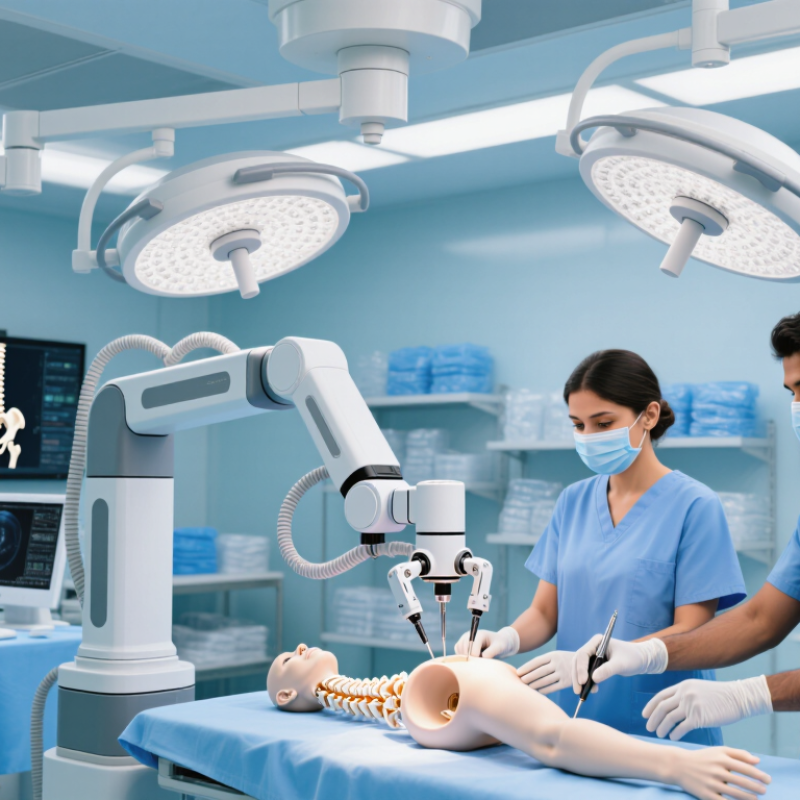
Robotic assistance can support controlled bone preparation and planned movement ranges. It does not replace clinical judgment. Experienced teams still assess bone quality, soft-tissue balance, and unexpected findings during surgery. Some systems require extra setup time. That matters in busy operating rooms. Patient selection also remains critical, since minimally invasive access is not suitable for every fracture or joint condition.

The safest approach combines validated technology with hands-on expertise, sterile technique, and transparent patient discussion. Surgeons should explain possible benefits, limitations, recovery demands, and conversion to open surgery when necessary. Small incisions do not guarantee a small recovery. Results depend on diagnosis, rehabilitation, and careful follow-up. Technology helps, but it is not magic.

2026 Top Minimally Invasive Orthopedics Suppliers? - Key Technologies Used in Minimally Invasive Orthopedic Care

Supplier Category Core Technology Typical Orthopedic Application Key Components or Instruments Clinical Value Important Considerations Technology Maturity in 2026
Arthroscopy System Suppliers High-definition and 4K arthroscopic imaging Knee, shoulder, hip, ankle, wrist, and elbow procedures Arthroscopes, camera heads, light sources, monitors, pumps, shavers, and fluid-management systems Improves visualization through small portals and supports treatment of cartilage, meniscal, ligament, and synovial disorders Requires accurate portal placement, controlled irrigation pressure, and trained surgical personnel Established
Endoscopic Spine Suppliers Uniportal and biportal endoscopic spine surgery Selected lumbar disc herniation, spinal stenosis, and decompression procedures Endoscopes, working channels, trephines, graspers, punches, radiofrequency probes, and irrigation systems Uses small access channels and may reduce muscle disruption, postoperative pain, and hospital stay in appropriate cases Patient selection and surgeon experience are critical; the technique is not appropriate for every spinal pathology Expanding
Robot-Assisted Surgery Suppliers Image-guided robotic assistance and computer-assisted navigation Total and partial knee arthroplasty, hip arthroplasty, and selected trauma procedures Optical trackers, planning software, robotic arms, bone-preparation tools, and instrument arrays Supports three-dimensional planning, alignment verification, and controlled bone preparation Adds capital, maintenance, training, and operating-room workflow requirements; clinical value depends on procedure and implementation Established in selected procedures
Navigation and Surgical Planning Suppliers Computer-assisted navigation using optical or electromagnetic tracking Spinal instrumentation, pelvic surgery, trauma fixation, and joint replacement Navigation cameras, reference frames, tracked instruments, planning workstations, and intraoperative imaging interfaces Provides real-time instrument and anatomy localization and can support accurate implant positioning Accuracy can be affected by registration errors, line-of-sight limitations, patient movement, and imaging quality Established
Percutaneous Fixation Suppliers Minimally invasive fracture and spinal fixation systems Vertebral compression fractures, thoracolumbar fixation, pelvic injuries, and selected long-bone fractures Cannulated screws, percutaneous plates, guidewires, dilation systems, expandable implants, and image-guided targeting tools Reduces the need for large exposures and may limit soft-tissue stripping in suitable fracture patterns Requires fluoroscopy or navigation and careful management of radiation exposure and neurovascular risk Established
Percutaneous Joint Replacement Suppliers Muscle-sparing and tissue-sparing surgical approaches Selected hip and knee replacement procedures Specialized retractors, short-shaft instruments, compact broaches, trial implants, and alignment guides May support reduced soft-tissue disruption and early mobilization when used with appropriate patient selection A smaller incision does not automatically mean a lower-risk operation; component positioning and patient anatomy remain decisive Mature with ongoing refinement
Advanced Imaging Suppliers Three-dimensional intraoperative imaging and cone-beam computed tomography Complex spinal, pelvic, trauma, and deformity surgery Mobile imaging units, 3D reconstruction software, radiolucent tables, and image-registration tools Improves visualization of three-dimensional anatomy and allows intraoperative verification of fixation or implant position Involves radiation, equipment cost, workflow integration, and image-quality considerations Established in complex cases
Augmented Reality and Mixed-Reality Suppliers Head-mounted visualization and holographic surgical guidance Orthopedic training, preoperative planning, navigation support, and selected trauma or spine workflows Headsets, depth cameras, tracking markers, 3D anatomical models, and procedure-planning software Can display patient-specific anatomy and procedural information without requiring constant attention to a separate monitor Evidence, interoperability, visual registration, ergonomics, and regulatory clearance vary by intended use Emerging
Navigation-Compatible Implant Suppliers Patient-specific planning and digitally enabled implant positioning Complex joint reconstruction, revision arthroplasty, spinal deformity, and custom trauma reconstruction Patient-matched guides, digitally planned implants, calibration tools, and tracking-compatible instruments Links preoperative imaging with intraoperative execution and may support reconstruction of complex anatomy Requires accurate imaging, validated design workflows, production control, and sufficient lead time Expanding
Biologic and Regenerative Technology Suppliers Arthroscopic biologic delivery and tissue-repair technologies Selected cartilage, tendon, ligament, and bone-healing procedures Scaffolds, delivery cannulas, cell-processing systems, platelet-concentrate devices, and fixation materials Enables delivery of repair materials through small access points and may complement mechanical stabilization Clinical evidence and regulatory status differ substantially among products and indications; biologics are not interchangeable Indication-dependent

Note: Technology maturity describes general adoption in minimally invasive orthopedic care and does not represent an endorsement, safety guarantee, or regulatory approval for a specific supplier or product.

How to Evaluate and Compare Orthopedic Equipment Suppliers

When comparing minimally invasive orthopedic equipment suppliers for 2026, start with clinical fit, not catalog size. The World Health Organization reports that approximately 1.71 billion people live with musculoskeletal conditions worldwide. That scale increases pressure on hospitals to choose reliable, adaptable systems. Ask for peer-reviewed evidence, procedure-specific outcomes, and failure-rate data. A polished demonstration is not evidence.

Quality systems deserve equal attention. ISO 13485 certification supports controlled medical-device processes, but certification alone does not prove excellent performance. Review audit history, complaint handling, traceability, and corrective-action timelines. The U.S. FDA’s medical-device reporting framework shows why post-market surveillance matters. Request anonymized field data for the previous three years. Also check whether instruments arrive sterile, calibrated, and ready for the operating room.

Service can decide the real cost. Compare repair turnaround, local technical coverage, training hours, loaner availability, and software support. The OECD’s Health at a Glance reports persistent pressure on hospital efficiency and workforce capacity, making usable equipment especially important. Calculate total cost across five years, including consumables, maintenance, inventory, and staff training. I have found that the cheapest quotation often becomes expensive after delays. No scorecard is perfect. Procurement teams should document assumptions, test equipment with surgeons and nurses, and revisit supplier performance after six and twelve months.

Leading Supplier Categories Across Minimally Invasive Orthopedics

The 2026 minimally invasive orthopedics market is shaped by several supplier categories, not one dominant product group. Implant and fixation suppliers remain essential for small-incision trauma procedures. Their portfolios often include plates, screws, anchors, and instrument sets designed for precise placement. Grand View Research estimated the global orthopedic devices market at approximately USD 57 billion in 2023, with steady growth expected through 2030. The report also identifies trauma and extremity procedures as important demand areas.

Arthroscopy suppliers form another major category. They provide scopes, pumps, shavers, cameras, and disposable accessories. In a surgical suite, image clarity and fluid control can influence every movement. Fortune Business Insights reported continued expansion in the global arthroscopy devices market, supported by sports injuries, aging populations, and shorter hospital stays. Small details matter. Sterile packaging matters too.

Navigation, robotics, and surgical planning suppliers are gaining attention. These systems can support alignment, workflow documentation, and repeatable instrument positioning. MarketsandMarkets has projected strong growth for surgical robotics, although its figures cover multiple specialties, not orthopedics alone. That distinction deserves caution. Data conflict. Procurement teams should compare clinical evidence, training requirements, service response, and total procedure cost. Biologic material suppliers also deserve review, especially where tissue repair and bone healing are involved. However, clinical outcomes can vary by patient, technique, and follow-up quality. No scorecard is perfect. Suppliers should disclose limitations, not only favorable performance data.

2026 Top Minimally Invasive Orthopedics Suppliers

Leading supplier categories across minimally invasive orthopedics, ranked by estimated 2025–2026 market growth potential. Orthopedic robotics and navigation show the strongest expansion, while arthroscopy and minimally invasive trauma fixation remain established high-volume categories.

Metric: estimated global market CAGR, 2025–2030. Values reflect category-level public market research estimates and do not represent individual company or brand performance.

Regulatory, Quality, and Supply Chain Considerations for Buyers

2026 Top Minimally Invasive Orthopedics Suppliers: Regulatory, Quality, and Supply Chain Considerations for Buyers

Supplier selection should begin with regulatory evidence, not sales claims. The FDA Quality Management System Regulation becomes effective on February 2, 2026. It incorporates ISO 13485:2016 requirements. Buyers should request current certificates, audit findings, device history records, and change-control procedures. A certificate alone proves little. Traceability must reach the implant, instrument, packaging lot, and sterilization record. MedTech Europe’s 2024 industry data describes a European market worth about €170 billion, with roughly 15,000 companies and 90% classified as small or medium-sized enterprises. Smaller suppliers may offer agility, but their validation depth can vary.

Quality reviews should include complaint trends, nonconformance rates, supplier controls, and corrective-action closure times. The FDA’s Quality Management System Regulation Final Rule offers a useful benchmark for documented controls. Supply chain checks need equal attention. Ask for dual-source plans, resin and titanium origin, sterilization capacity, inventory days, and recovery times after disruption. Deloitte’s 2024 Global Life Sciences Outlook identifies resilient, digitally visible supply networks as a continuing sector priority. Yet digital dashboards can hide weak data. I would personally verify one shipment trail from purchase order to delivery. It is slower, but revealing. No supplier is risk-free. A polished audit can still miss subcontractor dependence, incomplete validation, or a delayed material change. That uncomfortable gap deserves written escalation before approval.