Top 10 Facts About Ilizarov External Fixator in China?
The Ilizarov External Fixator has gained significant attention in China for its innovative approach to orthopedic treatment. Dr. Li Wei, an expert in orthopedic surgery, emphasizes its importance by stating, “The Ilizarov method transforms our ability to treat complex fractures.” This fixator is crucial for patients with severe bone injuries, providing stability and promoting healing.
In recent years, its application has expanded, showcasing its versatility. It supports limb lengthening and correction of deformities. However, the procedure is not without challenges. Patients often experience discomfort during the healing process. Proper education and post-operative care are essential for successful outcomes.
In exploring the top 10 facts about the Ilizarov External Fixator, we uncover both its benefits and limitations. Understanding this device's role in modern medicine requires a deep dive into its mechanics and patient experiences. The journey through recovery can be daunting, but the advancements in this field inspire hope for many.
History and Development of Ilizarov External Fixator in China
The Ilizarov external fixator has a rich history in China. Introduced in the late 20th century, it became vital for treating complex fractures. This device supports bone healing by stabilizing broken limbs externally.
Surgeons embraced it for its ability to correct deformities. Over time, its application expanded to include limb lengthening.
Many Chinese hospitals now employ the Ilizarov technique. The method has evolved, driven by local needs and innovations. Training programs are standard for surgeons to master this skill. However, the learning curve can be steep. Some facilities may struggle to achieve consistent results. This variability can affect patient outcomes.
Tips: Always consult an experienced surgeon when considering the Ilizarov fixator. Communicate openly about your expectations and concerns. Research local hospitals to find those with a strong record in this technique. Engaging with support groups can also provide valuable insights.
Key Features of the Ilizarov External Fixator
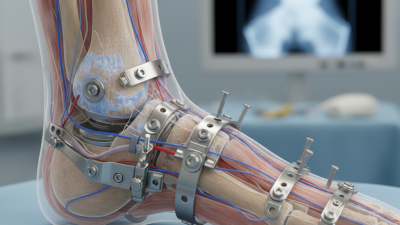
The Ilizarov External Fixator is a revolutionary orthopedic device. It offers a unique approach to treat complex bone fractures. This fixator stabilizes bones using external rods and rings. It allows for significant adjustments during recovery. Surgeons can manipulate alignment without additional surgery.
One key feature is its ability to promote bone regeneration. The fixator creates a controlled environment for healing. It often spares surrounding tissues, minimizing damage. However, this method requires rigorous patient commitment. Regular adjustments and hygiene are crucial for avoiding complications.
The versatility of the Ilizarov fixator is noteworthy. It treats deformities and aids limb lengthening. Its design accommodates various types of fractures. Yet, patient comfort can be a drawback.
The external apparatus may lead to discomfort and psychological challenges.
Regular follow-ups are essential for tracking progress and adjusting care.
Applications and Use Cases in Chinese Orthopedic Practices
The Ilizarov external fixator has become a crucial tool in orthopedic practices across China. It offers stability for fractures and limb deformities.
Surgeons often use it for bone lengthening and correcting limb alignment. The device's ability to allow gradual adjustments makes it unique. This precision can lead to successful outcomes, yet challenges remain. Each case requires careful planning and consideration.
In major urban hospitals and rural clinics, the Ilizarov system is applied in diverse situations. Surgeons may encounter patients with severe trauma or congenital limb issues. The fixator supports healing, but complications can arise.
Infection risk is always a concern. Some patients report discomfort with the external frame. Therefore, effective communication about the procedure is vital.
Training and experience play a significant role in the successful use of the Ilizarov fixator.
Knowledgeable orthopedic specialists are essential for optimal outcomes. However, the learning curve can be steep. New practitioners may struggle initially. Continuous education and supervision help mitigate risks.
Many hospitals emphasize mentorship for junior doctors. This approach encourages skill development and enhances overall patient care.
Advantages of Ilizarov External Fixator Over Traditional Methods
The Ilizarov external fixator has revolutionized orthopedic treatment in China. This device offers significant advantages over traditional methods. One of the main benefits is its ability to stimulate bone regeneration. According to a study published in the Journal of Orthopedic Research, the Ilizarov technique can increase bone healing rates by up to 40%. This efficiency is crucial for patients recovering from traumatic injuries or complex fractures.
Moreover, Ilizarov devices are less invasive compared to traditional surgical methods. This reduces the risk of infection and complications. Traditional surgeries often require extensive soft tissue dissection. In contrast, Ilizarov external fixators allow for minimal tissue disruption. This approach can lead to quicker recovery times.
However, it is essential to acknowledge some drawbacks. The fixator can be uncomfortable and may require a longer adjustment period. Patients need to be educated about proper care and potential complications. Monitoring is vital to ensure optimal healing. Despite these challenges, the Ilizarov method stands out as a powerful tool in modern orthopedics.
Challenges and Limitations in the Implementation of the Fixator in China
The Ilizarov external fixator has transformed limb reconstruction in China, but its implementation faces notable challenges. One significant issue is the lack of trained personnel. According to recent data, over 60% of healthcare providers report inadequate education on applying this technique. This gap can lead to suboptimal patient outcomes. Furthermore, many hospitals struggle with having enough resources for proper training sessions.
Another challenge is the varying levels of acceptance among surgeons. A survey found that nearly 40% of orthopedic surgeons expressed hesitance in using the fixator due to unfamiliarity. This reluctance may stem from the complex nature of the device and its application. Surgeons often cite time constraints and the need for additional support, which can hinder effective treatment.
Tip: Collaboration is essential. Hospitals should foster environments for continuous learning and practice. Regular workshops can improve confidence among surgeons using the fixator.
Additionally, patient compliance is often underestimated. Many patients face psychological and physical challenges while adapting to the fixator's requirements. Studies indicate that up to 30% of patients discontinue usage early due to discomfort. Addressing these concerns should be a priority.
Tip: Clear communication can ease patient anxiety. Educating patients on the process helps improve adherence and satisfaction.